
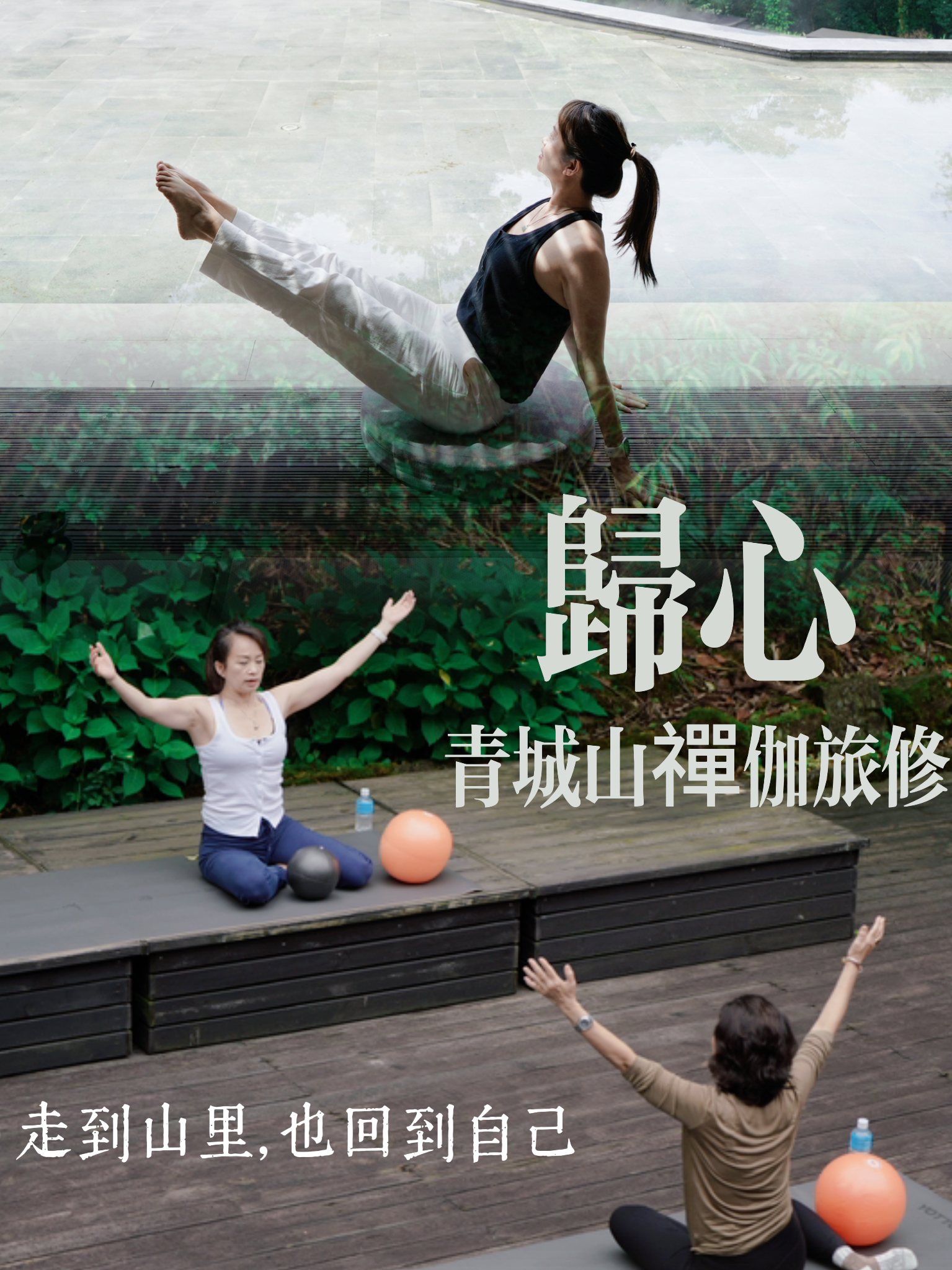
For our retreat at Qingcheng Mountain, we chose ZEN•GA® as the primary mat-based movement practice.
Upon arriving in Qingcheng Mountain, the most immediate sensation was that the breath naturally began to slow down. The air, humidity, sounds of the forest, and the openness of the surroundings allowed us to temporarily release the tension and pace of everyday life. In this environment, it became easier to notice where the breath was moving within the body—and which areas still lacked space and mobility.
Throughout the three-day retreat, we did not rush to pursue greater range of motion or intensity. Instead, we began with the fundamentals: breath, body weight, and support from the ground.
On the first day, we used soft balls and the mat to explore one of the key ZEN•GA concepts: Masses & Spaces.
When the body is willing to yield its weight into the ball and the ground, rather than constantly gripping through the muscles, the breath can more easily expand into the sides of the rib cage, the back body, and the posterior ribs. During lateral flexion and lengthening movements, the breath helped create more space along the sides of the body. Through supine and prone exercises, we gradually began to connect the rib cage, abdomen, pelvis, hip joints, and legs as one integrated system.
Breathing here was not simply about “taking a deeper breath.” It was about using the diaphragm and the three-dimensional expansion of the rib cage to create internal space, while gently awakening the deeper support of the abdominal system.
As the practice progressed, we moved from supine to side-lying positions, and gradually returned to standing. The feet sensed the support of the ground beneath us as the body lengthened upward. We moved from Yield to Support, and from stable support into standing, weight shifting, and continuous whole-body movement. Through this process, everyone began to experience that stability does not mean holding the body rigid or fixed.
True stability is the ability to remain connected to the centre while the breath, centre of gravity, and movement continue to change—allowing force to travel smoothly through the body and into the limbs.
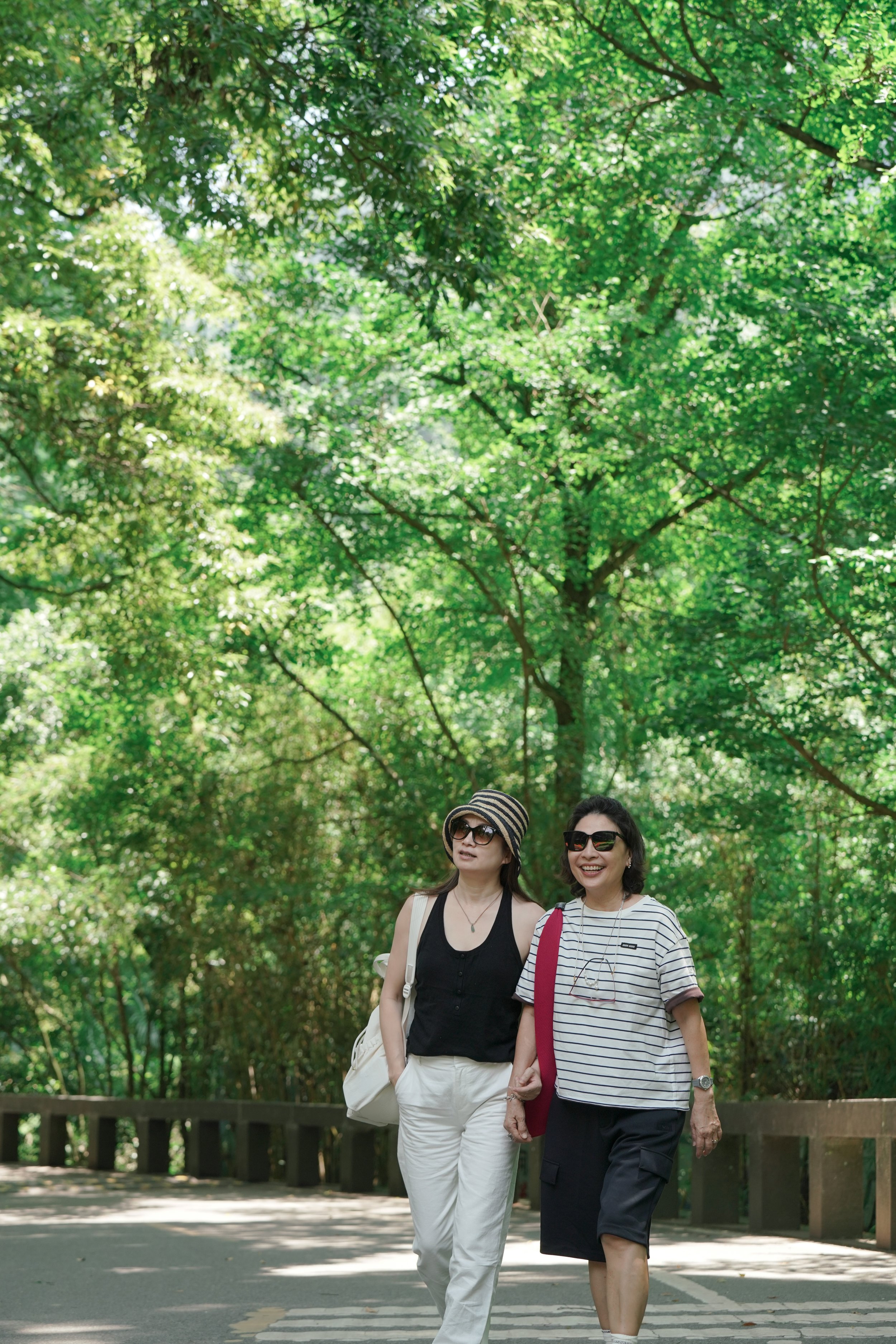
When we walked into the mountain trails of Qingcheng Mountain that afternoon, the work from the studio naturally returned to everyday movement. Faced with continuous steps and changing gradients, the feet, legs, hips, trunk, and breath all needed to participate together, rather than relying on one part of the body to push through with excessive effort.
This was also the deeper purpose of the retreat. We did not simply leave the city to complete a series of classes. We used the natural environment of Qingcheng Mountain to help the body rediscover awareness, support, elasticity, and flow.
When the breath has space and the feet feel supported, the body naturally understands how to lengthen upward—and how to move forward with greater ease and confidence.
